States visited map: how to track the US states you have been to

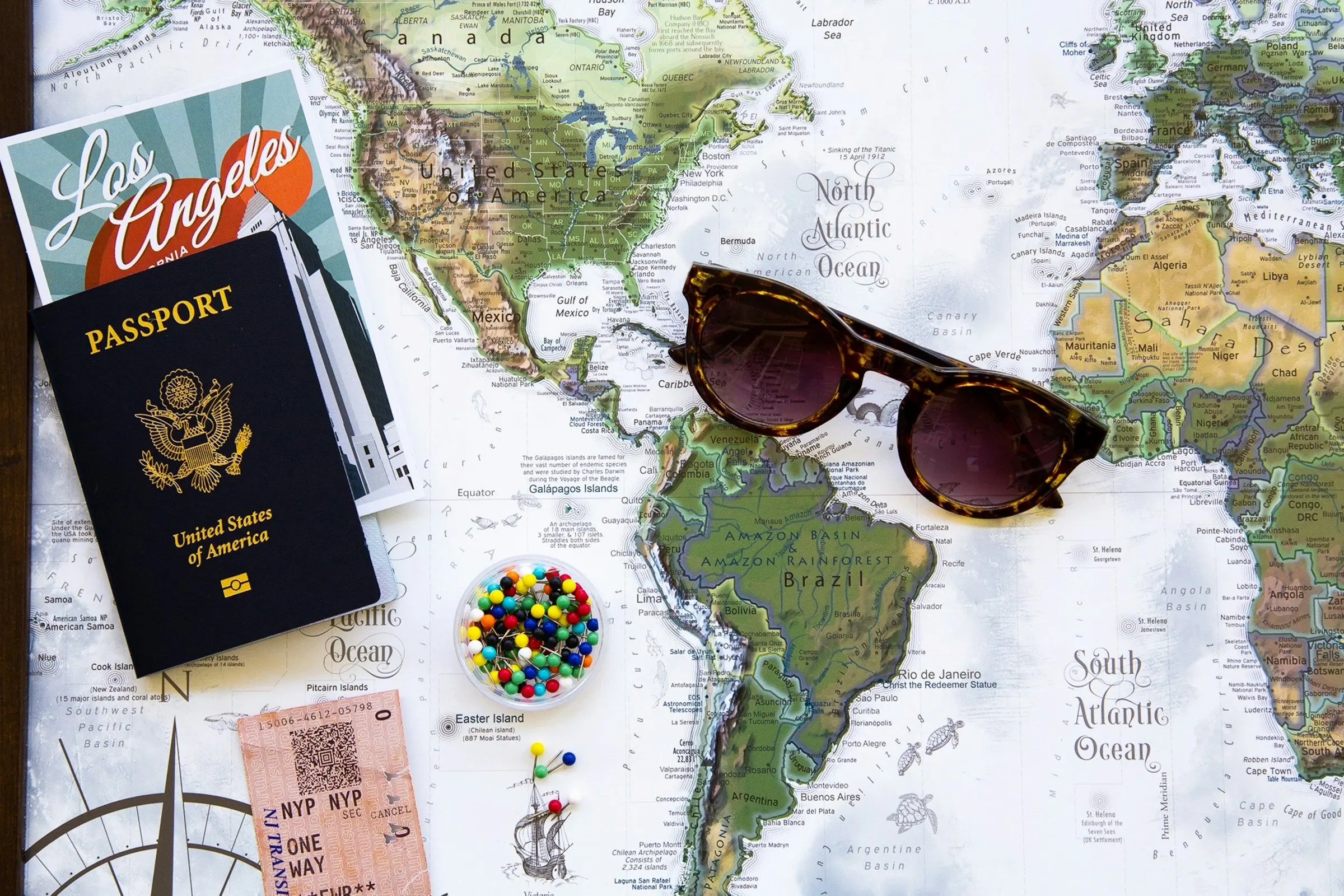
To make a states visited map, write down every US state you have been to, decide what counts as a visit, and colour them in on a blank map of the fifty states. Paper maps, printable maps and phone apps all work; what matters is a clear rule and a place to record each trip when you get home. Many people also include Washington, DC, so decide that up front.
Counting states is a classic road-trip game, and the list tends to grow in patches: a childhood drive, a wedding, a work trip, a long loop across the country. Here is how to build it and keep it honest.
Decide what counts
The same question that applies to countries applies to states, and the answers are just as personal. A few common rules:
- Set foot in it. You count the state if you got out of the car and did something, even buy fuel and a coffee.
- Spend real time. A meal and a walk, or longer.
- Stay a night. The strictest rule.
- Drive through. Some people allow it, many do not.
Airports are the usual argument: does changing planes in a state count? If you want the full discussion, what counts as visiting a country walks through the same cases, and the logic carries over. Whatever rule you choose, write it at the top of the list.
You also need to settle whether the list is fifty, or fifty plus Washington, DC and the US territories. Pick one and name it.
Build the list
Do it in one sitting.
- Start with the obvious ones. Where you live, where you grew up, where family lives.
- Go through your photos by year. Your phone's map view of photos shows where each was taken.
- Add every road trip. Trace the route, because the states in between are the ones people forget. If you need a prompt, plan a cross-country road trip shows how people join up regions.
- Ask the people you travelled with.
- Note the year beside each state.
Then count, and count again in a month, because you will remember another.
Colour it in
Choose the format that suits you:
- A printed map and coloured pencils. Simple, and a good project with kids.
- A scratch poster of the states. Satisfying, but see scratch map or travel map app for its limits.
- A map on your phone. It stays current, and it is easier to share.
- A road-trip habit. Some families colour in a state on the map at the border sign, which makes it a game for the car.
The level of detail is up to you. States on their own are simple; adding the cities or parks you visited makes the map more personal.
Go further than the count
Fifty is a small number compared with the variety inside it. Once you have the map, you can ask better questions:
- Which regions have you seen the most of, and which not at all?
- How many of the states have you seen only from a highway?
- Is there a state where you would spend a week instead of a night?
- Which neighbouring states would fit on one trip?
The gaps are your next trip. Grouping the missing states into regions turns a long list into a few routes, and a long route is a good case for planning the days before you set out. How to plan a national parks trip is a natural fit if the unvisited states are full of parks.
Tracking states in Travel Life
Travel Life keeps a travel map on your profile of the countries and cities you have been to, filled in by your trips' destinations and the places you add, with counts of countries, cities and days away. You can add a US state to it as a place, as well as cities. The app counts countries and cities, not states, so if you want a running total of states, keep that number yourself and use the app for the record and the shareable card.
Keep it going
A states list is easiest to keep up on the way home from each trip. Add the state before you unpack, and note the year. Over a decade it becomes a record of your life as much as of the map.
Road-trip habits that help
If you travel by car, a few small habits make the record almost automatic:
- Photograph the state sign as you cross the line. Your photo library then holds a dated proof of each state.
- Keep a paper map in the glove box and let a passenger colour in each state as you cross it.
- Note the fuel stop. A receipt or a card charge dated in each state is a second source later.
- Write one line per state at the end of each driving day, so the map has a memory beside every colour.
The same habits work for a train or a bus trip. The aim is the same: leave a trace as you go, so you are not rebuilding the list from memory years later.
A note on territories and Washington, DC
Decide early whether your list is fifty states, fifty states plus Washington, DC, or all of those plus the US territories. Any of the three is a fair choice, and the important part is to say which one you mean when you give a number. A friend who counts territories will report a bigger total than one who counts only states, and neither is wrong.
Next: share it or plan the next state
If you want to show it off, share your travel map covers what to include. If you want to fill a gap, group trip ideas for friends is full of reasons to head somewhere new.