Share your countries visited map: what to show and keep back
To share a countries visited map, turn it into an image: a screenshot, an export from a map tool or a card from a travel app, and send it where you want it seen. Before you post, check what the picture gives away, because a map can reveal more than the countries: where you live, when you travel and when you are away from home.
Sharing a map is one of the nicest parts of keeping one. People like to compare, ask for recommendations and be reminded of their own trips. Here is how to do it well and sensibly.
Pick the format
- A screenshot. Quickest, and fine for a message. Crop out anything you do not want to share, such as notifications or other tabs.
- An image card from an app. Designed to look good in a feed or a message, with your counts on it.
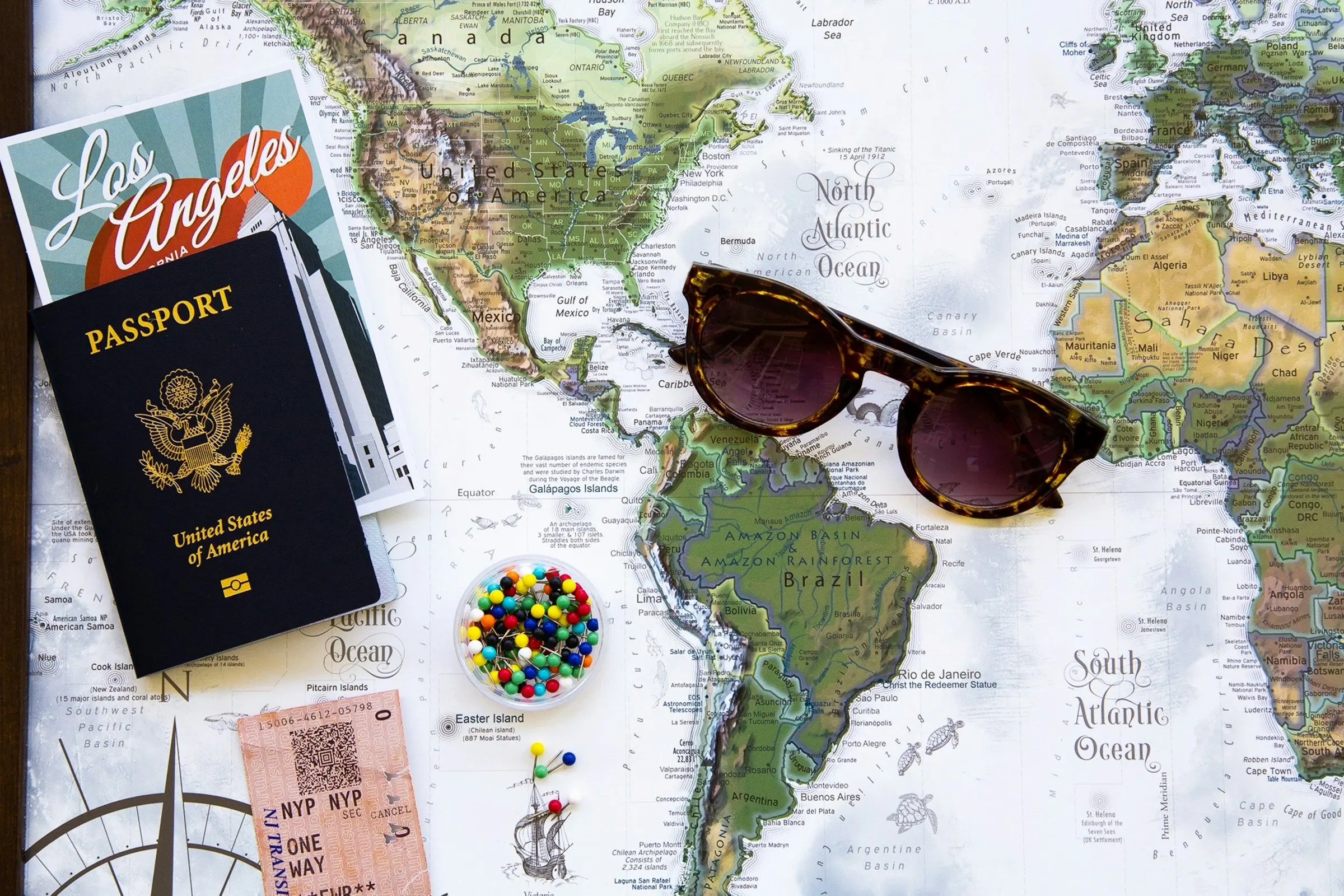
- A photo of a wall map. Charming and personal; keep the room out of the frame if it shows more of your home than you intend.
- A link to a live map. Convenient, but it keeps showing whatever you add later, so know who has it. Think of it like any link you hand out: anyone with it can look.
- A printed copy. For a gift or a family wall.
For most people, an image is the right choice, because it shows the map as of today and nothing more.
Decide what the picture says
Look at your map as a stranger would. What does it tell them?
- Where you live. If your home country or city is pinned, you are telling people where to find you. Consider leaving your home city off a public image.
- When you travel. A map that updates live shows when you are away. A fixed image, posted after you return, does not.
- Who you travel with. Names on a map are other people's information. Ask before you share them.
- Counts. A number invites comparison, and some people feel pressure when they see it. Share it if it is fun, not if it starts a competition.
A good rule: share the past, not the present. A picture of the places you have been is a story; a picture of where you are now is an invitation to notice an empty house.
Choose the audience
Not every picture belongs everywhere.
- Close friends and family. Everything is fine; they will enjoy the detail.
- Social media. Share the finished image after the trip, with no dates and no live location.
- Colleagues and acquaintances. Keep it light: the countries, not the cities.
- A travel group or forum. Good for swapping tips; the countries and your rule for counting them are enough.
If you want your family and friends to follow a trip while it happens, that is a different job from sharing a map afterwards. The guide to sharing your trip with family and friends covers it.
State your rule
A map with a number on it begs the question "does that count?". One line under the image takes care of it: "Counting places I stayed at least a night." It saves the debate, and if you have not chosen a rule yet, what counts as visiting a country will help.
Make it look good
A few small touches matter in a feed:
- Square or portrait crops often display better on phones.
- Plain background and strong colours read at a small size.
- Fewer labels. A cluttered map is hard to read when it is the size of a thumbnail.
- A short caption. The number and one memory: "Twelve countries, and the best meal was in the smallest one."
Sharing from Travel Life
Travel Life shares your profile travel map as an image card. The map is filled in by your trips' destinations and the places you add, with counts of countries, cities and days away. Two card styles are free; the other styles and a photo card come with Pro.
Because it is an image, it shows the map as it is when you share it and nothing after, which suits the "share the past" rule above.
A quick check before you post
Run through this list each time:
- Is the picture a finished record of past trips, not a live view?
- Have I cropped out notifications, names and anything personal?
- Does it show my home or my daily routine?
- Are the people I travelled with happy to be on it?
- Have I said how I count, in one line?
If every answer is fine, post it. A map is a friendly thing to share, and a minute of care is all it needs. People who see it will often reply with the places they have been, and that is where the best recommendations come from.
Sharing with a purpose
A map is most useful when it starts a conversation. Ask for something when you share it: "Where should I go next in Asia?" gets more replies than a bare picture. People enjoy being asked for recommendations, and you collect tips you can use when you plan the next trip. It also gives the picture a point beyond the count, which keeps it from reading as a boast.
If you would rather keep it private
Not every map needs an audience. You can keep it for yourself, or share it only with the people you travel with, and it is still worth having. Some people share only a cropped section, such as one continent, or a version with the counts left out. Others share only when a trip is a milestone. There is no right amount: the point of the map is that it is yours, and sharing is a choice you can make or skip each time.
Next: build the map worth sharing
If your map is still half empty, make a map of everywhere you have been gets it started, and how to track countries visited keeps it growing.