How to plan a trip to the Amalfi Coast: towns, transport, timing
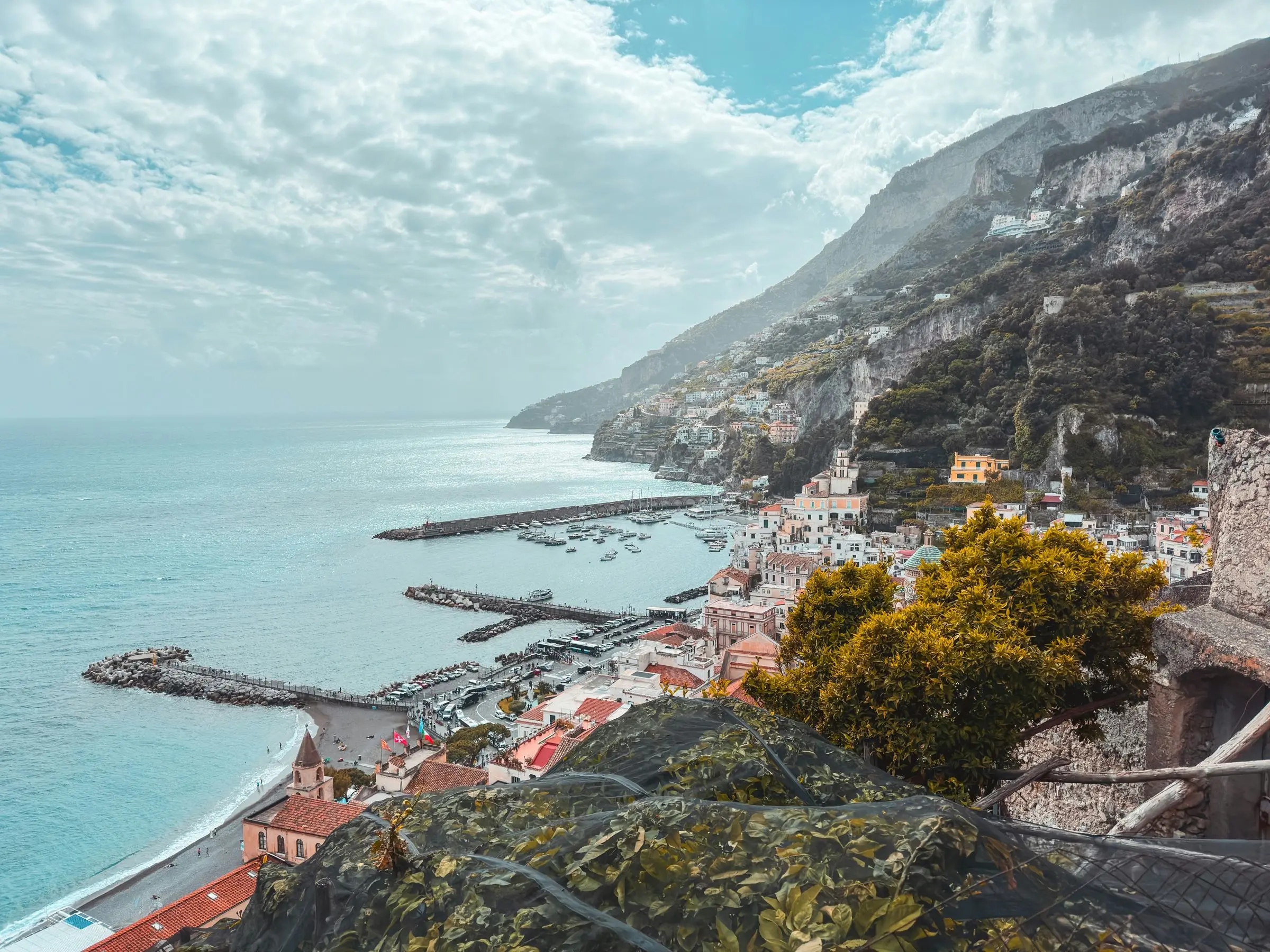
To plan a trip to the Amalfi Coast, pick one base town, travel along the coast by ferry or bus rather than by car, and give the trip four or five days. The coast is a narrow strip of cliffs and villages in southern Italy. The road is slow, the towns are steep, and the biggest planning decision is where you sleep.
Choose a base, not a route
The coast road runs for about fifty kilometres from Positano in the west to Vietri sul Mare in the east, with a string of towns on the way, and Sorrento and Salerno just beyond each end. People often try to see them all and end up on a bus. A better plan is to choose a base for the whole trip and make day trips from it.
- Sorrento. Just beyond the western end, on the other side of the peninsula, with the easiest train connection from Naples and good ferries. A practical base with more choice of rooms.
- Positano. The one in all the photographs, steep and beautiful, with a lot of stairs. Lovely, but not easy with heavy luggage.
- Amalfi. In the middle, with a good ferry port, a bigger town centre and bus links to the hill villages.
- Ravello. High above the sea, quiet and known for its gardens and views. A good base if you want calm and do not mind a bus ride to the beach.
- Salerno. Just beyond the eastern end, with the train station, the ferry port and more everyday life. Less famous, and often easier to book.
If you want more than one night in each place, limit yourself to two bases. Moving your luggage along a cliff road is more tiring than it looks. How many days in each city covers the same trade-off.
Pick your season
Spring and early autumn bring good weather and fewer people than the summer peak. July and August are the busiest, with the heaviest traffic and the hardest rooms to find. Many hotels, restaurants and ferries operate only in the warmer months, so check what is running before you book anything for the very start or end of the season. Shoulder season travel explains the trade-offs.
Getting there
Most visitors arrive through Naples, by air or train, and continue by road or sea. From Naples you can take a train to Sorrento, a ferry to several towns along the coast, a bus or a private transfer. Rome is a long day by road, but easy by train to Naples. If you are building a bigger trip in Italy, the Italy travel guide covers the main cities, and train travel in Europe explains the basics of getting around by rail.
Getting along the coast
This is the part most worth planning, because the coastal road is narrow and often congested.
- Ferries. In season, boats connect the main towns and are usually the most pleasant and reliable way to move between them. Timetables change with the season and the weather, so check the operator's current page before you rely on one.
- Buses. A public bus service runs along the coastal road and up to the hill towns. In the busy months it can be crowded, and you may need to wait for the next one.
- Taxis and drivers. Convenient with luggage, but not cheap for longer trips, so agree the price before you go.
- Driving yourself. Possible, but hard. The road is narrow, with tight bends and large buses, parking is scarce and expensive in the towns, and many town centres restrict car access. In the busiest months, the main stretch of the coast road has also limited visiting cars to alternate days by number plate, so check the official rules for your dates. If you do drive, read driving abroad and check each town's rules for visitors.
For most trips, a combination of ferry and bus, without a car, is the least stressful.
What to see and do
The sights here are mostly the places themselves, so plan around a few experiences, not a long list.
- A boat day along the coast, with a swim stop.
- A walk on one of the high paths between villages, such as the route known as the Path of the Gods. It has stairs and can be tiring, so go early and carry water.
- Ravello's gardens and views.
- A visit to Amalfi's cathedral and old town.
- A day trip to the island of Capri or to the ruins at Pompeii, if you have the time.
Keep each day to one or two of these. The walking is steeper than most people expect.
Where to eat and what to book
You do not need to book everything, but the best terraces and boat trips fill up in summer. Reserve what matters most to you the day before, or earlier in peak months. Taste what grows here: lemons, anchovies, fresh seafood and simple pasta.
Packing for stairs
Pack light. Many lodgings are up long flights of steps, and luggage wheels do not help. Bring comfortable shoes with grip, sandals for the beach, a hat and a swimsuit. A beach holiday packing list covers the basics.
Planning it with friends or family
This is a popular place for groups, which means a lot of small decisions about rooms, ferries and who is paying for what.
If you are renting a house together, split a villa fairly covers the usual arguments before they start.
Practical habits that save the day
Check the ferry timetable the evening before, since boats can be cancelled in rough weather and you will want time to switch to the bus. Keep your luggage to what you can carry up a staircase, and ask your host how to reach the door from the stop, because some lodgings are a steep walk from the nearest road. Carry some cash for small purchases in the villages, and fill your bottle at the fountains where the water is marked as drinkable. Finally, leave a late afternoon free: the light on the cliffs, and a quiet terrace, are a good reason to stop.
What to do next
Pick a base and a month, then check the current ferry and bus pages for those dates. Book the room first, then one day for the boat, one for a walk and one for doing very little. That is a good trip.