How to plan a hiking trip: routes, stays, gear and safety
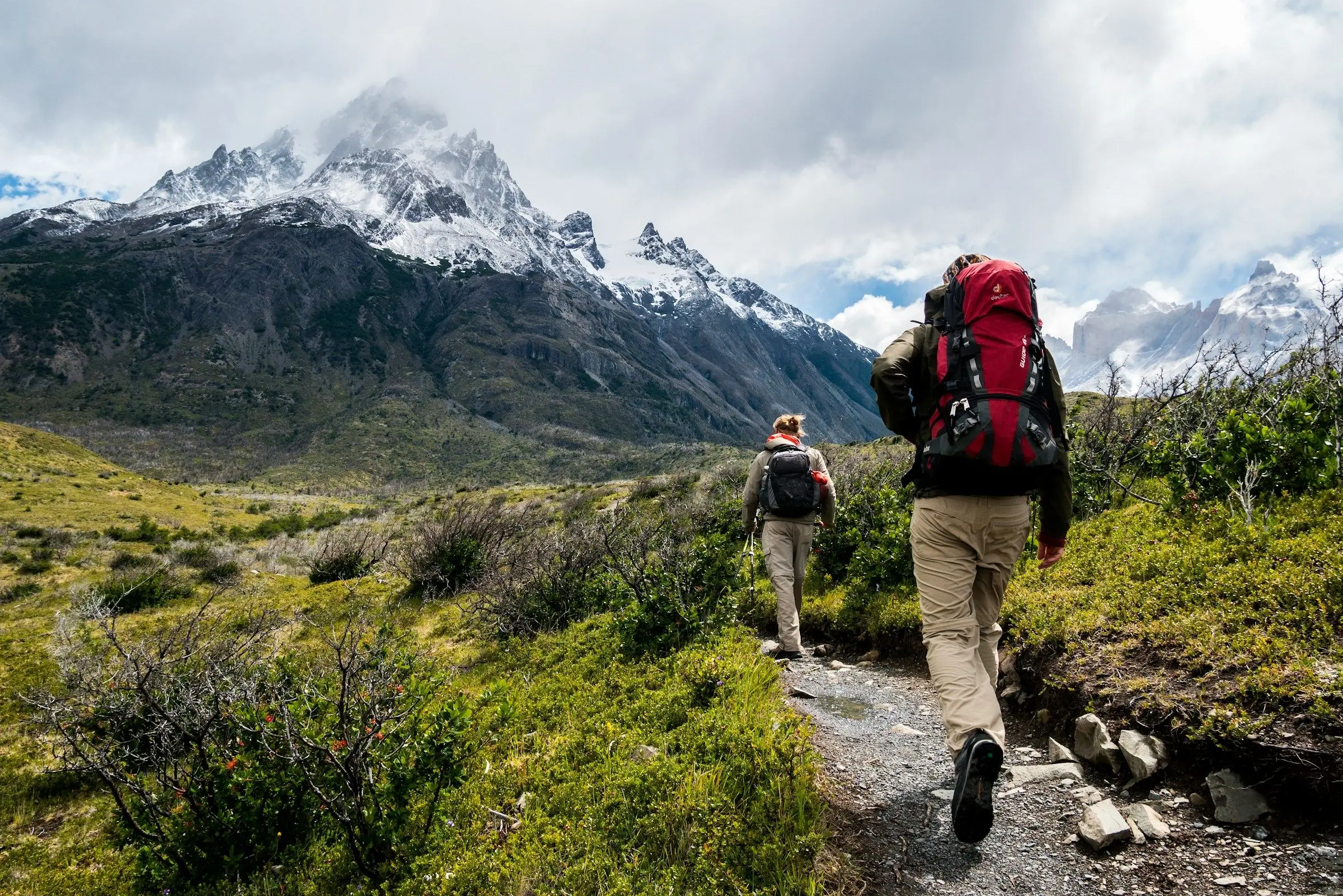
To plan a hiking trip, choose a route that matches the fittest comfortable day you have, not the best day you ever had, then check the season, any permits and where you sleep each night. Pack for the weather you may get, and leave your plan with someone at home.
A good hike is simple. A bad one is usually a route that was too long, a season that was wrong or a bag that was too heavy. Most of the planning is avoiding those three.
Choose a route you can finish
Start with distance, climbing and time. Look at the length of each day, the total ascent and how long the walk takes at your normal pace. A guidebook or the park's own page gives all three. As a rough guide, a normal walking pace slows on steep ground and with a heavy pack, so add time for breaks, photos and bad weather.
Pick a route that suits the weakest walker in the group. Check how the trail is graded, whether there are scrambles or exposed sections, and whether there are shorter ways down if someone is tired or the weather turns. A loop is simple for logistics, and a one-way trail needs a bus, a taxi or a second car.
Think about how many days. For a first multi-day hike, two or three days with short stages is better than a week of long ones. You can always extend it next time.
Check the season and the weather
The season decides which routes are open. Snow can linger on high passes into summer, mountain huts close for the winter, and some trails are closed for wildlife, fire risk or maintenance. Look at the official page of the park or the trail for the open dates, and check the forecast and trail conditions close to the day you start.
Plan for weather that changes. On a mountain, the temperature can drop a long way with height, and storms arrive in the afternoon in some regions. Start early, aim to be at the highest point before midday, and turn back when the weather says so. The summit will be there next year.
Permits, huts and places to sleep
Many well-known trails need a permit, a booking or a reservation for huts or campsites, and the popular ones fill up well before the season. Find out early what yours needs, from the official page of the park or the trail, and book as soon as the dates are open.
Your choices are:
- Huts or lodges: meals and a bed, so you carry less. They need booking, and many ask for a deposit or have their own rules on cancellation.
- Camping: more freedom and more weight. Camp only where it is allowed, since the rules differ by place.
- Staying in a base town and doing day walks: the easiest. You carry only a day pack, and bad weather costs you a day, not the trip.
Whichever you choose, write down where you sleep each night, with the booking confirmation, the address and the check-in times.
Get there and back
Trailheads are often far from the town. Look at how you get there, when the bus runs and what happens if you finish a day later than planned. Find out the way home from the end of the trail, as well as the way to the start. Public transport in a new city covers the basics, and renting a car abroad helps if you will drive to the trailhead.
Pack light, and pack for weather
A heavy pack is the main thing that spoils a hike. Pack what you will use, and keep the weight to what you can carry comfortably all day. The core is:
- Boots or shoes that you have already walked in, to avoid blisters
- Layers, including a waterproof jacket, and a warm layer even for a summer walk
- A hat, sun protection and sunglasses
- More water than you think, and a way to purify it if you will refill from streams
- Food for the day, plus a little extra
- A map, a compass or a downloaded offline map, and a power bank
- A basic first-aid kit, blister plasters and any medication
- A headtorch, in case the day runs long
The full list is in the hiking trip packing list. Test your boots and your pack on a few shorter walks before the trip.
Safety basics
Hiking is mostly safe if you plan for the case where something goes wrong.
- Tell someone your plan: where you are going, the route, when you expect to finish and when they should raise the alarm. Tell them when you are back.
- Download maps for offline use, as signal is rare on trails. Travel offline shows how to prepare your phone.
- Know the local emergency number and the park's contact details, from the official page.
- Turn back early if you are tired, the weather has changed or the route is not what you expected.
- Keep the group together, walking at the pace of the slowest person.
Travel safety tips covers the wider habits.
Walking with a group
A group is as fast as its slowest walker, so agree a pace, regular stops and a rule that nobody is left behind. Decide who is carrying the shared items and who is leading and who is at the back. Talk about the day's goal before you set off, so no one feels pushed to go further than they want.
What to do next
Choose a route, then check its season and permits on the official page and book the huts or stays. Put the stages, the stays and the transport to the trailhead in one plan, and share it with the people walking with you and one person at home.